What odd and even means in cricket betting, and what counts towards the total
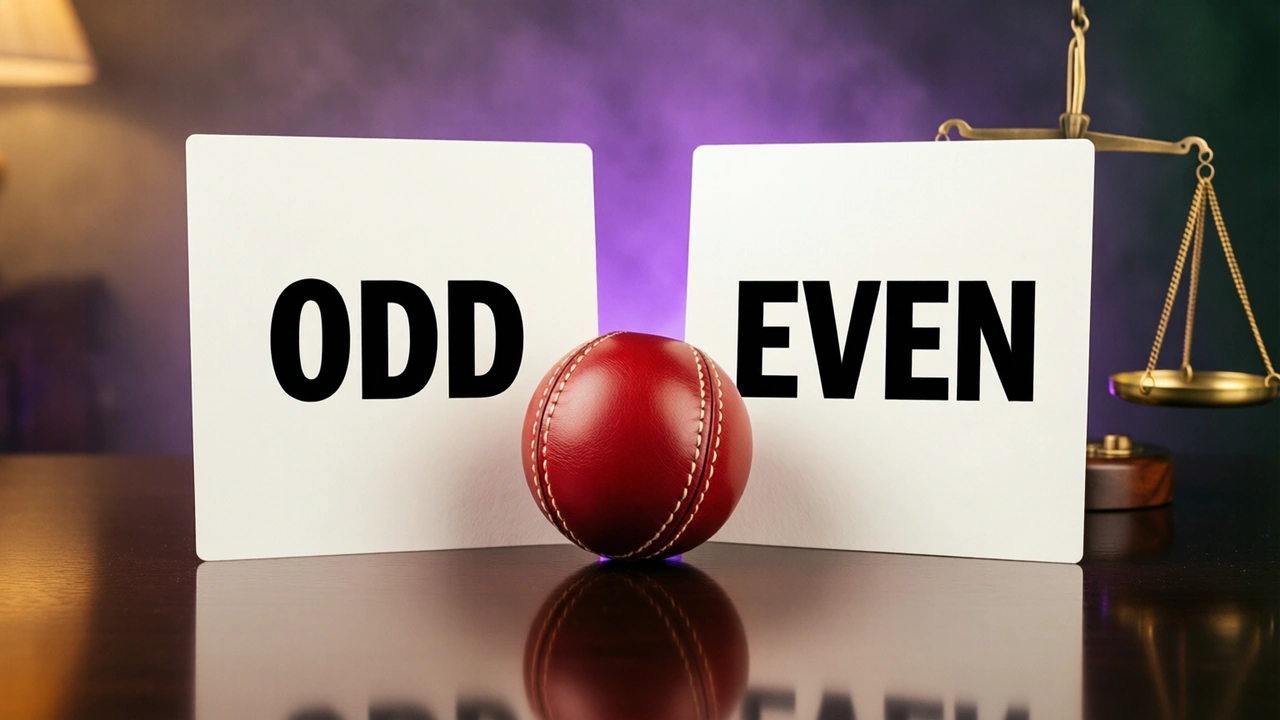
An odd/even bet ignores who wins. It asks one thing about a number: when the total is final, is it odd or even? 187 is odd. 188 is even. That is the whole market.
Before the first ball
Which total is being asked about
The market is only as clear as the total it names. Before looking at the price, find out which of these it is:
- match total — both innings added together;
- one team's innings total;
- runs in a set stretch, such as the first six overs;
- runs in a single over.
Each is a separate market with separate settlement. "Odd/even" on its own is not enough information.
Before the first ball
What counts as a run
Everything the scorer adds to the total. That includes:
- runs off the bat;
- wides and no-balls, each worth at least one run;
- byes and leg byes;
- penalty runs awarded by the umpires.
Extras are the ones that surprise people. A no-ball in the last over can flip the answer, and it counts exactly like a single.
Before the first ball
The price is almost always the same on both sides
There is no reason for a run total to favour odd or even, so most sites price both at the same number — typically around 1.90 each.
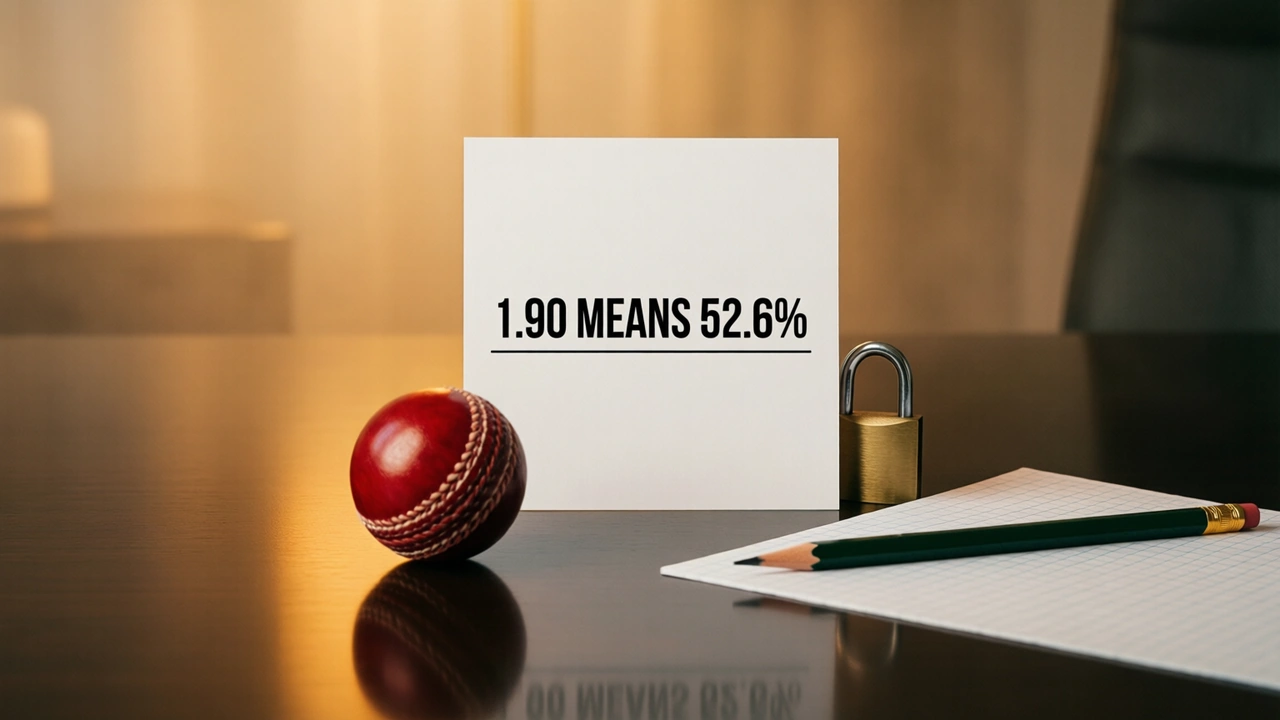
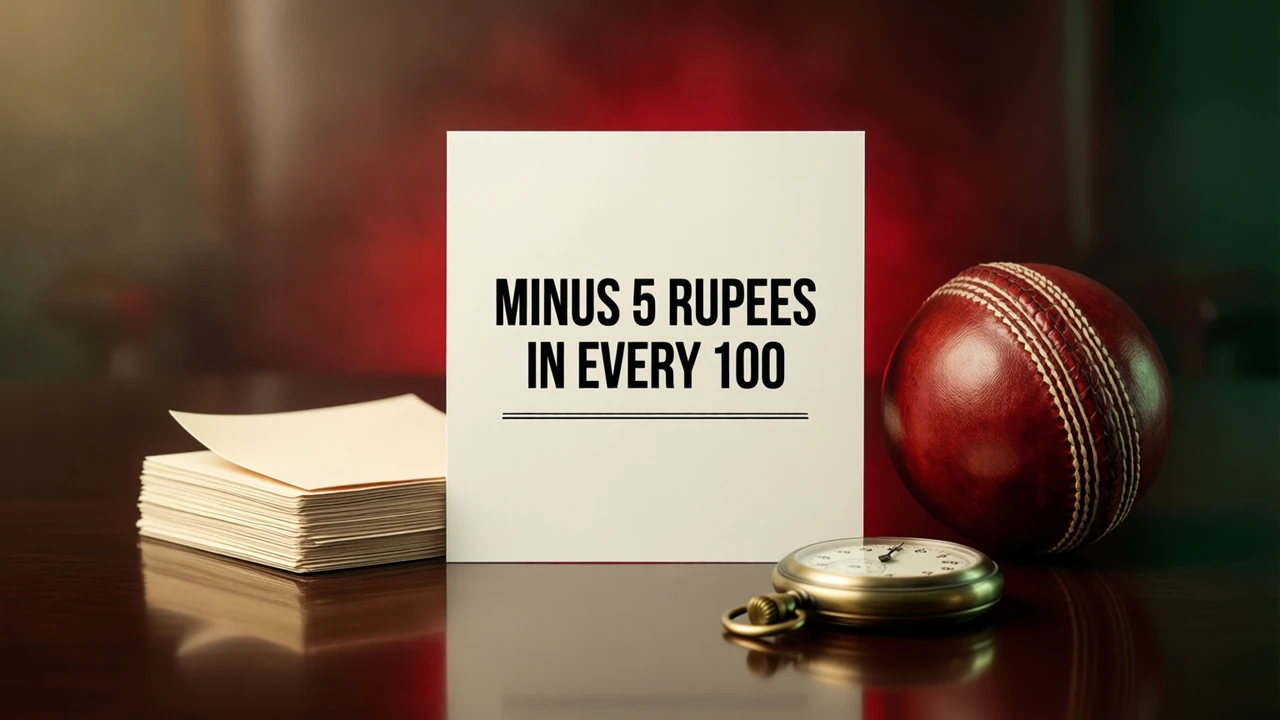
That makes the arithmetic easy to see. 1 ÷ 1.90 = 52.6% for odd, 52.6% for even: 105.3% in total. The 5.3% above 100 is the margin, and it is the whole story of this market. On a true fifty-fifty, betting ₹100 at 1.90 returns ₹190 half the time and nothing half the time — an average of ₹95 back per ₹100 staked.
No amount of cricket knowledge changes that figure. Nobody can forecast the parity of a total, which is why this market has no angle to find. It is useful for understanding how a margin works, and not much else.
Before the first ball
When the match is shortened
Rain is where odd/even gets complicated, because the total you bet on may never be completed.
The usual approaches:
- void — the stake is returned if the full number of overs is not bowled;
- settle if a minimum is reached — for example, if a set number of overs was bowled in the innings in question;
- settle on the final total regardless — rarer, and stated clearly when it applies.
Which one applies is written in the market rules. On an overcast day it is worth reading before staking, because the difference between a void and a loss is your whole stake.
Before the first ball
A note on over-by-over markets
Odd/even on a single over, or on a short stretch, is priced and settled while the match is being played. It is the same parity question but belongs with in-play betting, which moves fast and uses a vocabulary of its own. This site stays with the pre-match version.
Before the first ball
Odd/even checklist
- I know which total the market is about — match, innings, stretch or over.
- I know extras count towards it.
- I have added both prices and know the margin.
- I know what happens to this bet if rain shortens the match.
- I accept that no forecast improves my chance above fifty-fifty.
FAQ
What is odd and even in cricket betting?
A bet on whether a run total ends on an odd or an even number. Who wins the match does not matter.
Do wides and no-balls count in odd/even?
Yes. Every run added to the total counts, including extras and penalty runs.
Can you predict odd or even in cricket?
No. Parity has no pattern that form or conditions can reveal. The prices are equal on both sides for that reason.
What happens to an odd/even bet if it rains?
It depends on the site's rule: void, settled once a minimum number of overs is bowled, or settled on the final figure. Check before staking.