What handicap betting in cricket is, and how a run line settles
A handicap bet asks who wins after one team has been given a head start. In cricket the head start is measured in runs, and the number next to a team's name is how many.
Before the first ball
Why handicaps exist
When one side is a heavy favourite, the match-winner price on it becomes tiny — 1.20, 1.15 — and betting on it stops being worth much. A handicap evens the contest out by asking a harder question: not will the favourite win but will it win by enough.
That brings both prices back towards 1.90, which is where a lot of beginners prefer to bet.
Before the first ball
How to read the line
Take a one-day match with this line:
| outcome | line | price |
|---|---|---|
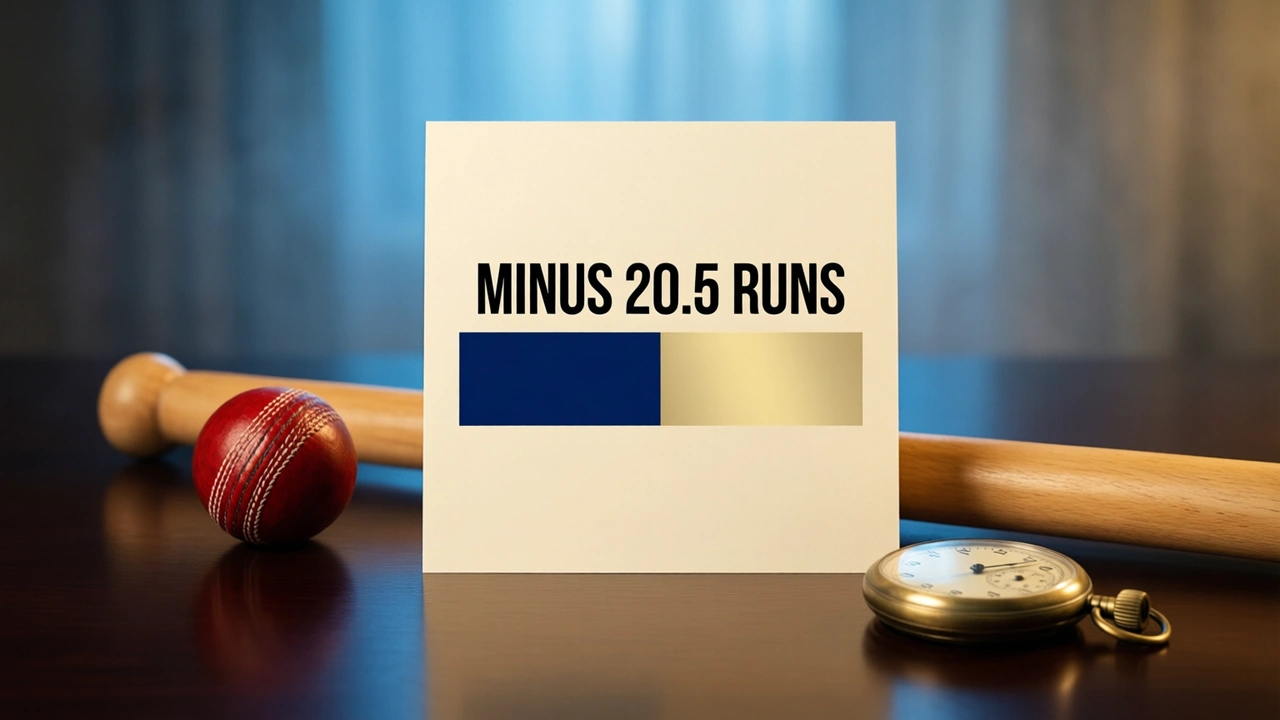
| India | −20.5 runs | 1.90 |
| Opponent | +20.5 runs | 1.90 |
India −20.5 wins only if India win the match by 21 runs or more.
Opponent +20.5 wins if the opponent win the match outright, or lose it by 20 runs or fewer.
The minus sign is the side giving runs away. The plus sign is the side receiving them. The two lines are always the same number with opposite signs.
Before the first ball
The half-run, and what happens without it
The .5 is there so the bet cannot land exactly on the line. A team cannot win by 20.5 runs, so every result is a clear win for one side of the bet.
When a site offers a whole number instead — India −20 — a margin of exactly 20 runs is a push: the bet is neither won nor lost, and the stake is returned. Beginners sometimes read a push as a loss because the balance did not grow. It is a refund.
Before the first ball
The rule that catches people: a win by wickets
This is the part to read before the match, not after it.
A margin in runs is easy to count when the side batting first wins. When the side batting second wins, the official result is written in wickets — "won by 6 wickets" — and there is no run margin to compare with −20.5.
Sites handle this in different ways. Some settle on the run difference between the two innings totals. Some price a handicap only for the side batting first. Some void the bet. There is no single industry rule, which is why the market's own rules decide, and why they should be read before you stake.
Before the first ball
Handicaps in a Test match
Test handicaps exist but are rarer. A Test can be won by an innings, by runs or by wickets, and it can be drawn — four shapes of result where a limited-overs match has two. Each site words its Test handicap rules separately. For a first bet, a limited-overs handicap is easier to follow.
Before the first ball
Doing the arithmetic
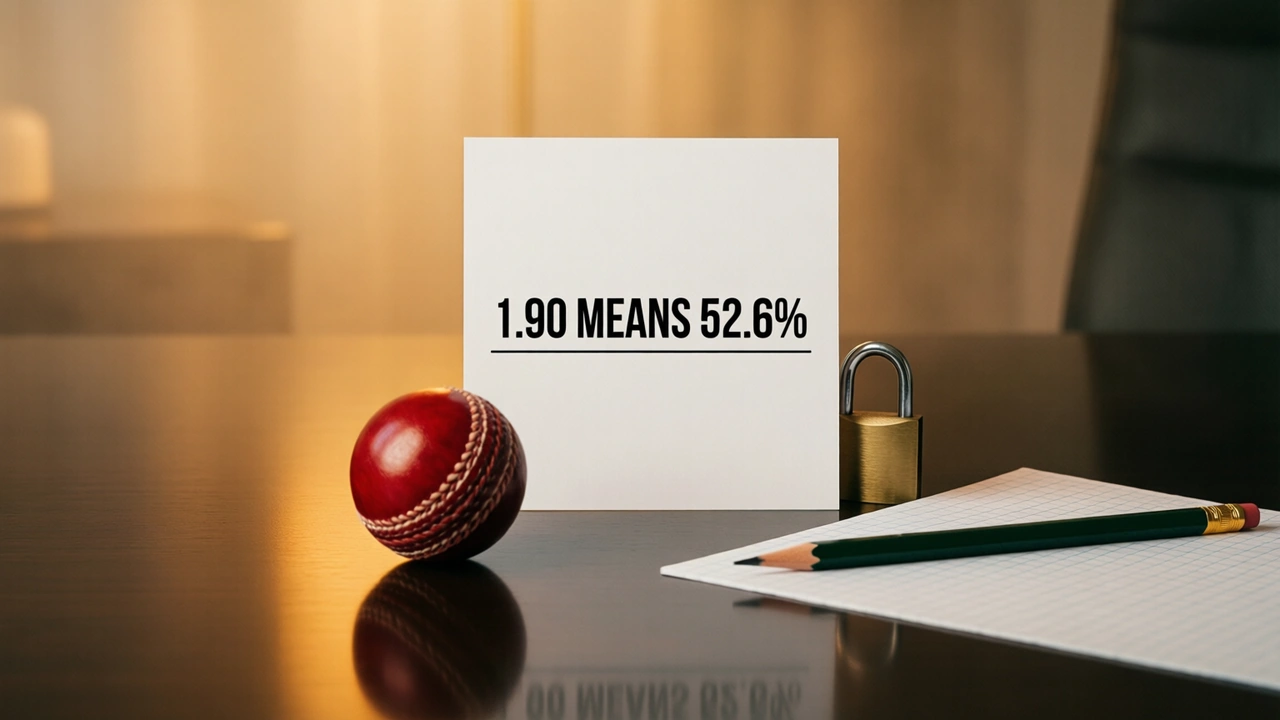
A handicap priced 1.90 on both sides is the same deal as a level match-winner market at 1.90: you need to be right 52.6% of the time to break even, and the market carries a 5.26% margin. The odds page shows how to check this on any pair of prices.
What changes is the question. On a handicap you are judging the size of the win, which depends on the toss, the pitch and whether the favourite bats first — things the match-winner price mostly ignores.
Before the first ball
Handicap checklist
- I can say which team is giving runs and which is receiving them.
- I have checked whether the line has a half-run or a whole number.
- I know what happens on this site if the chasing side wins by wickets.
- I have a reason to think the margin will clear the line, beyond "they are the better side".
- I know how this market settles if the match is shortened by rain.
FAQ
What does −1.5 mean in cricket handicap betting?
That team must win by 2 runs or more for the bet to win. It is a small handicap usually seen in close contests.
What happens if the margin is exactly the handicap?
With a half-run line that cannot happen. With a whole-number line it is a push, and your stake is returned.
Is a handicap bet riskier than a match-winner bet?
It is a different question, not a riskier one. The prices are usually closer to 1.90 on both sides, and the margin is similar.
How is a handicap settled if the team batting second wins?
It depends on the site. Some compare innings totals, some void the bet. Read the market rules before staking.