How a book earns
It does not need to know who will win. It needs its prices to add up to more than 100%.
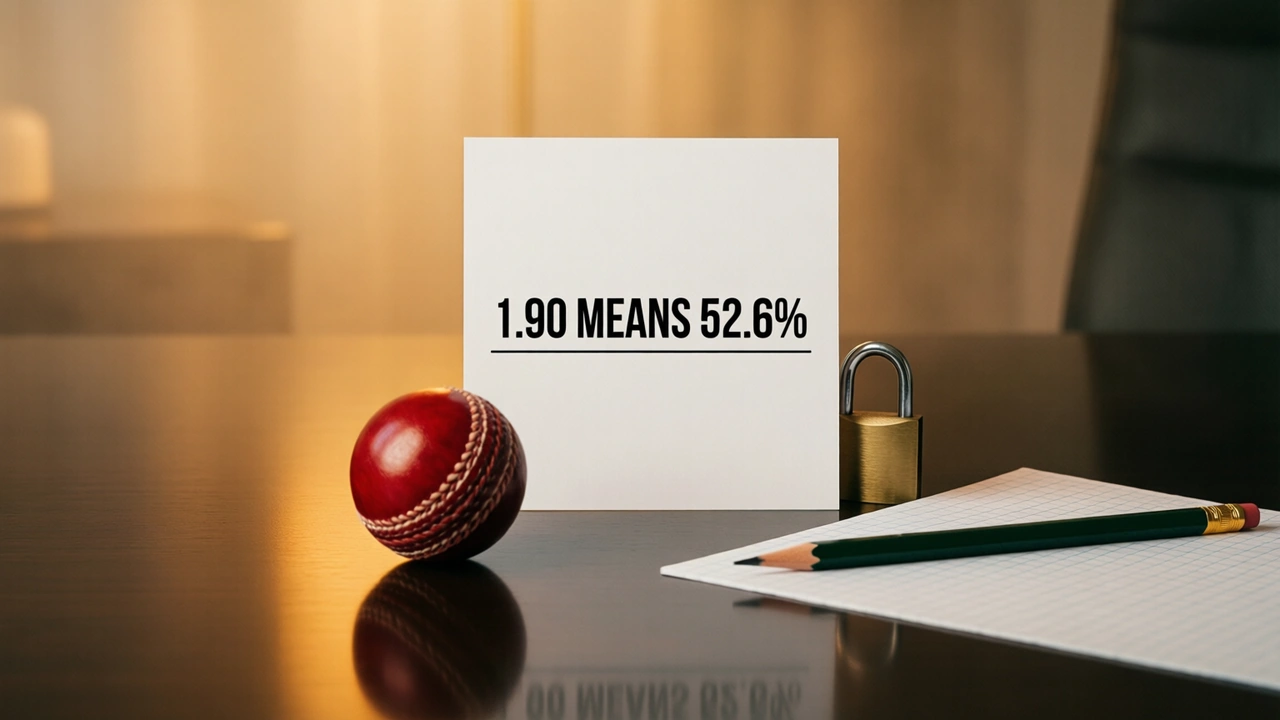
Take a level match priced 1.90 on both sides. Suppose ₹1,00,000 is staked on each team:
"Bookmaker" is used in two senses on Indian cricket betting screens, and beginners often meet the second before they understand the first. This page takes them in order, because the second only makes sense once you know what the first one does.

Before the first ball
A bookmaker is whoever sets the price and takes the bet. When you back a team at 1.90, the bookmaker is the party that pays ₹190 if you are right and keeps ₹100 if you are not.
You are not betting against other fans. You are betting against the book, at a price it chose.
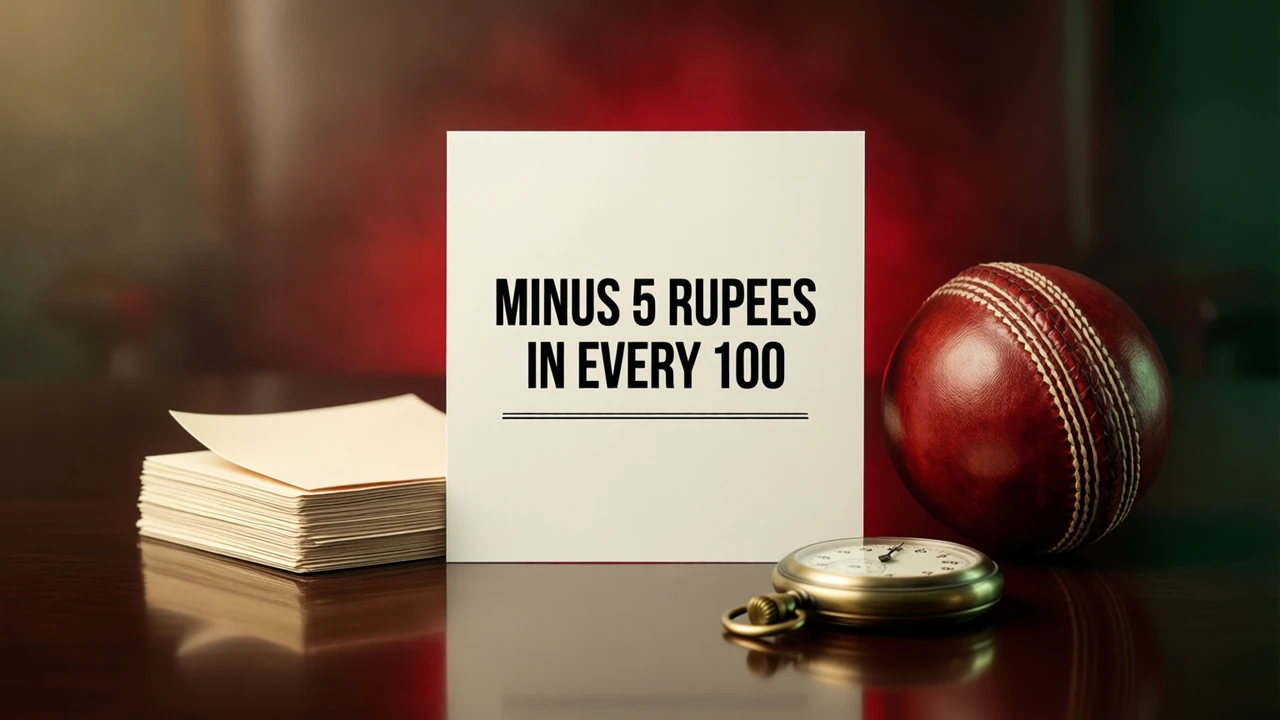
It does not need to know who will win. It needs its prices to add up to more than 100%.
Take a level match priced 1.90 on both sides. Suppose ₹1,00,000 is staked on each team:
An exchange does not set prices. It matches one customer who wants to back an outcome with another who wants to bet against it, and charges a commission on winnings. The prices are whatever the two customers agree to.
Everything that happens on an exchange during a match — backing and laying, trading a position as the rate changes — is in-play betting, a subject of its own with its own vocabulary. For a first bet, a bookmaker's fixed price is simpler: one number, locked when your slip is accepted.
Before the first ball
On many Indian-facing betting sites built in the exchange style, a match page shows several tabs side by side — usually something like Match Odds, Bookmaker and Fancy.
The Bookmaker tab is a match-winner market where the price is set by the site itself rather than matched between customers. Three things usually set it apart:
So the Bookmaker tab is simply meaning one — a fixed-price book — sitting inside a site that also runs an exchange. The same checks apply: work out 1 ÷ price, add both sides, read the settlement rules.
Before the first ball
A book prices every outcome slightly shorter than its real chance. You accept a price and lock it on a slip. When the result is official, the slip is paid at that price, lost, or voided under the market rules. Over many bets, the margin decides the average result; on any one bet, the cricket does. Everything else on this site is detail inside that paragraph.
Before the first ball
The business that sets the prices and accepts your bets. On some Indian sites it is also the name of a match-winner market where the site sets the rate itself.
By pricing each market so the implied chances add up to more than 100%. With balanced money on both sides, the book keeps the difference whoever wins.
A bookmaker sets the price and takes the other side of your bet. An exchange matches customers against each other and takes a commission on winnings.
Both ask who wins. In Match Odds on an exchange-style site the price comes from customers; in Bookmaker it comes from the site.