Mrunal Karandikar
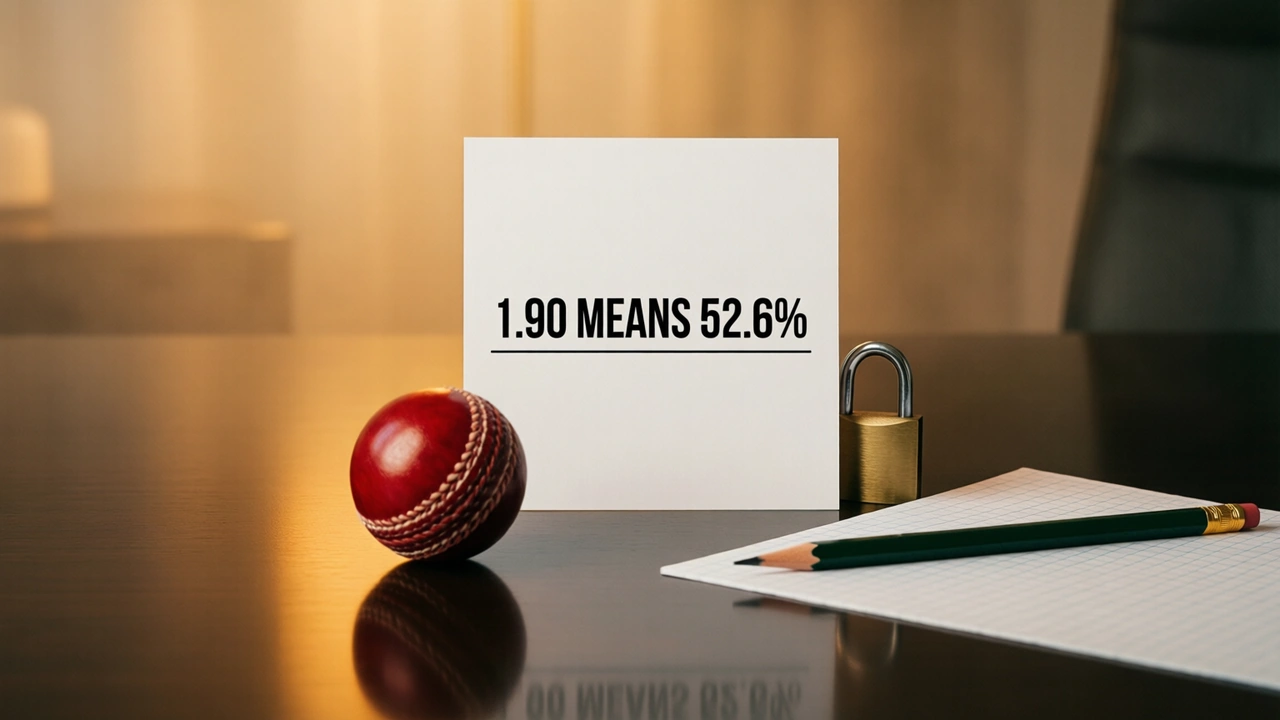
Mrunal reads a price the way other people read a scorecard: as a statement that can be checked. Before any page on this site says a bet is worth considering, the price behind it has been divided into one, added to its opposite number and had its margin taken out.

Before the first ball
The price desk
The seven steps on the home page are hers, along with the odds and rates page and the page on odd and even. All three come back to the same habit: never quote a price without the percentage it asks you to beat.
The table of decimal, fractional and 100-based rates is there because she kept meeting beginners who had learned one format from a relative, another from an app, and assumed the two described different things. They do not. A rate of 90, 9/10 and 1.90 are one number written three ways, and the conversion takes less time than reading this sentence.
Before the first ball
The notebook
She keeps a notebook of two-way markets whose prices looked generous until both sides were added together. The entries are not complaints; every book carries a margin of a few per cent, and that is how it stays open. The notebook exists because the margin is invisible on any single price and obvious the moment two are put side by side.
The odd/even page grew out of it. A market with two equal prices and no way to forecast the answer is the cleanest demonstration of a margin there is, which is why she wrote about it as a lesson rather than as a bet.
Before the first ball
What she will not write
A tip. A prediction for a named match. A sentence that says a price is good without saying what it has to beat. If a page needs a figure she cannot work out from the price itself or find written in a market's rules, the figure is left out and the page says so.